For families across North America and Europe, a beloved dog or cat is far more than just an animal—they are a child’s first best friend, confidant, and partner in daily adventures. When that precious companion passes away, the grief experienced by a child can be profoundly overwhelming. Because children process emotions differently depending on their developmental age, navigating this heartbreaking milestone requires gentleness, patience, and absolute honesty.
Learning how to help children cope with pet loss is one of the most tender responsibilities a parent can shoulder. By avoiding confusing euphemisms, validating their big feelings, and engaging in creative remembrance, you can help your child heal while honoring the animal that shaped their early years.
1. The Power of Honest, Age-Appropriate Language
When death touches the household, adults often try to protect children by using vague metaphors like “sleeping,” “going away,” or “getting lost.” However, these well-meaning phrases often backfire.
- Avoid Confusing Euphemisms: Telling a young child that their pet “went to sleep forever” can inadvertently trigger a severe fear of going to sleep at night.
- Use Clear and Gentle Truths: Explain simply that the pet’s body stopped working because they were very old or sick, and they will not be coming back. If your family is also trying to comfort other surviving household animals during this time, incorporating advice from supporting surviving pets through grief can help the whole household navigate the transition.
- Consult Child Psychology Resources: For professional guidance on discussing grief with young minds, you can review the official American Academy of Pediatrics child bereavement guidelines for expert developmental advice.
2. Validating Emotions and Creating a Safe Space
Children express grief in waves—one minute they are crying inconsolably, and the next, they are outside playing games. Both reactions are entirely normal.
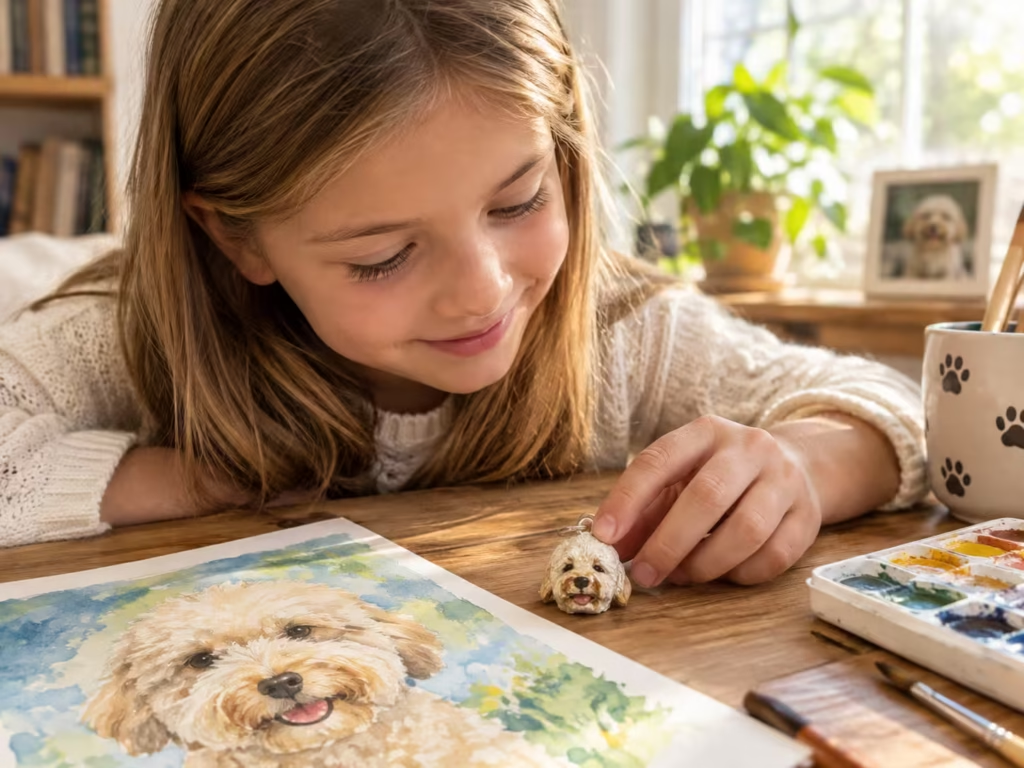
- Encourage Creative Expression: Give kids permission to draw pictures, write letters to their pet, or talk about funny memories.
- Answer Questions Patiently: Be prepared to answer the same questions repeatedly as they slowly process the permanence of the loss.
3. Meaningful Memorials and Keeping Memories Alive
Creating a tangible tribute gives children a healthy sense of closure and an ongoing connection to their furry friend.
- Hold a Backyard Farewell: Let children plant flowers over a special spot or say a few words in the backyard to honor their companion.
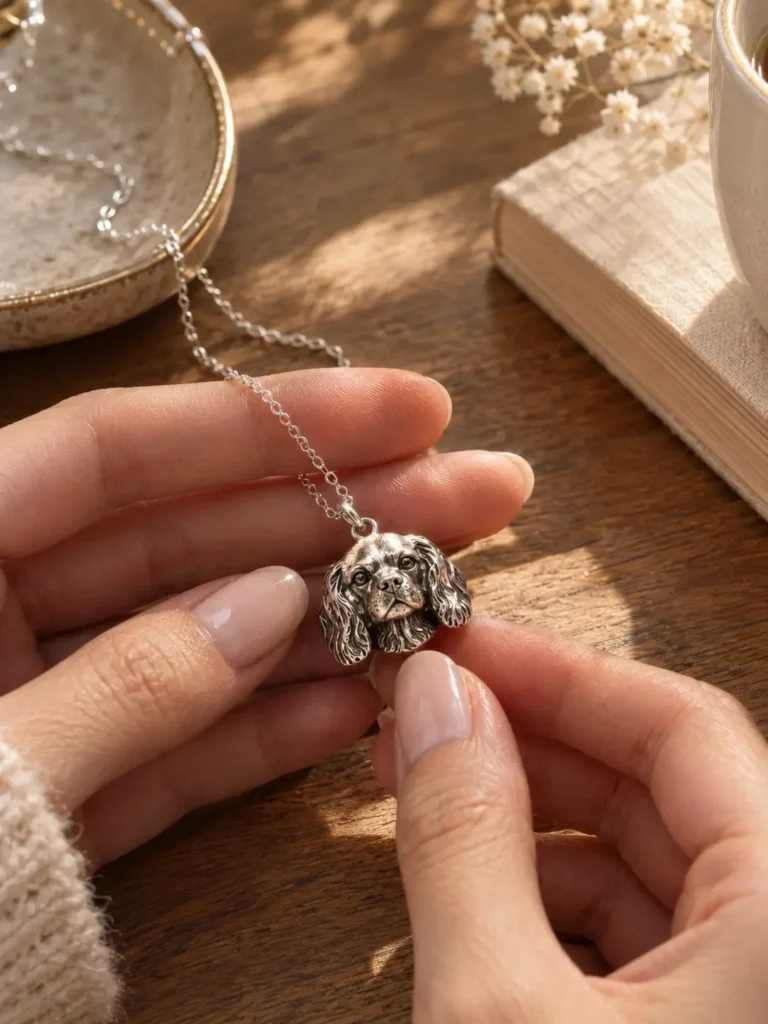
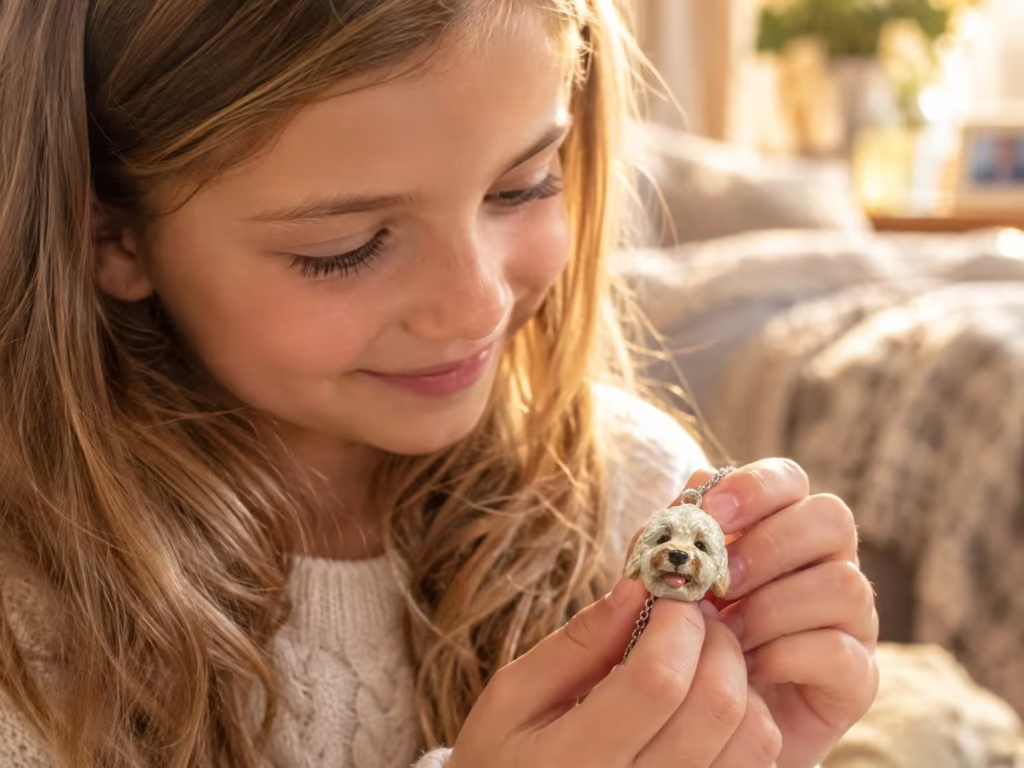
- Keep Memories Close to the Heart: Many families find great comfort in wearing a sentimental customized sterling silver pet memorial necklace featuring the pet’s likeness, allowing children to feel that their beloved animal friend is always watching over them.

Conclusion
Guiding a child through the heartbreak of losing an animal companion is a profound emotional journey. By speaking with honesty, validating their shifting feelings, and honoring the bond you shared, you teach them valuable lessons about empathy and resilience. As you help help children cope with pet loss, you ensure that the love left behind remains a permanent, beautiful part of their growth. Keeping those precious memories alive with a cherished custom sterling silver pet portrait jewelry piece can also bring immense comfort to young hearts for years to come.